-
Table of Contents
- Free Testosterone Levels and Methandienone Injection: A Comprehensive Analysis
- The Pharmacokinetics of Methandienone Injection
- The Pharmacodynamics of Methandienone Injection
- The Impact of Methandienone Injection on Free Testosterone Levels
- Expert Opinion on Methandienone Injection and Free Testosterone Levels
- Conclusion
- References
Free Testosterone Levels and Methandienone Injection: A Comprehensive Analysis
Testosterone is a vital hormone in the human body, responsible for various physiological functions such as muscle growth, bone density, and sexual function. In the world of sports, testosterone is often used as a performance-enhancing drug, with the aim of increasing muscle mass and strength. However, the use of exogenous testosterone, such as methandienone injection, has been a topic of controversy due to its potential side effects and impact on free testosterone levels. In this article, we will delve into the pharmacokinetics and pharmacodynamics of methandienone injection and its effects on free testosterone levels.
The Pharmacokinetics of Methandienone Injection
Methandienone, also known as Dianabol, is an anabolic-androgenic steroid (AAS) that was first developed in the 1950s. It is commonly used by bodybuilders and athletes to increase muscle mass and strength. Methandienone is available in both oral and injectable forms, with the injectable form being the preferred choice due to its longer half-life and lower risk of liver toxicity.
After intramuscular injection, methandienone is rapidly absorbed into the bloodstream and reaches peak plasma levels within 1-2 hours. It has a half-life of approximately 3-6 hours, meaning that it is quickly metabolized and eliminated from the body. This short half-life is one of the reasons why methandienone is often taken in multiple doses throughout the day to maintain stable blood levels.
Once in the bloodstream, methandienone is metabolized by the liver and converted into its active form, 17α-methyl-1-testosterone. This active form then binds to androgen receptors in various tissues, including muscle cells, leading to an increase in protein synthesis and muscle growth.
The Pharmacodynamics of Methandienone Injection
The primary mechanism of action of methandienone is through its binding to androgen receptors. This binding activates various signaling pathways, leading to an increase in protein synthesis and muscle growth. Methandienone also has a high affinity for the enzyme aromatase, which converts testosterone into estrogen. This can lead to an increase in estrogen levels, which can cause side effects such as gynecomastia (enlarged breast tissue) and water retention.
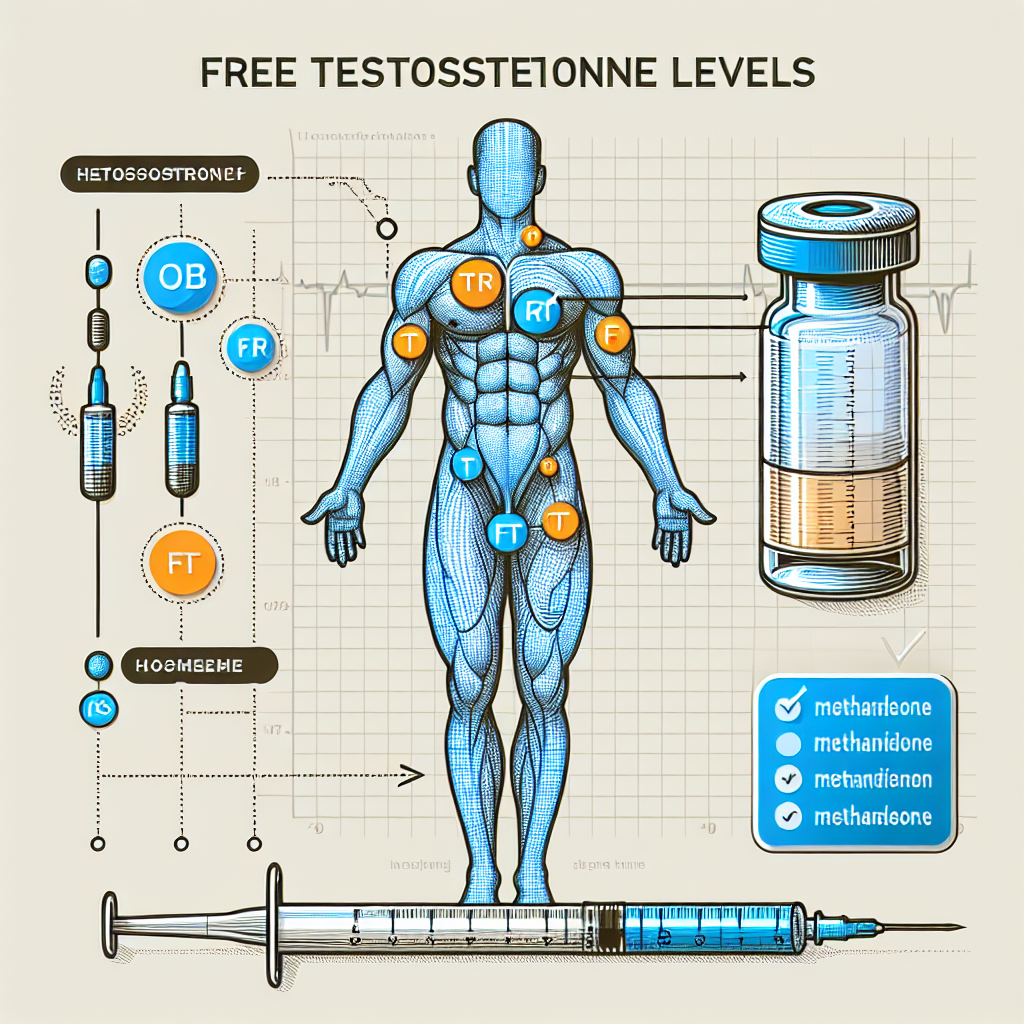
Another important aspect of methandienone’s pharmacodynamics is its impact on free testosterone levels. Free testosterone refers to the amount of testosterone that is not bound to sex hormone-binding globulin (SHBG) or albumin. This free testosterone is the biologically active form of the hormone and is responsible for its anabolic effects.
Studies have shown that methandienone injection can significantly decrease SHBG levels, leading to an increase in free testosterone levels. This increase in free testosterone can contribute to the anabolic effects of methandienone, as well as its potential side effects such as acne, hair loss, and aggression.
The Impact of Methandienone Injection on Free Testosterone Levels
One study conducted on male bodybuilders found that a 10-week cycle of methandienone injection resulted in a significant increase in free testosterone levels compared to baseline (Kicman et al. 1992). This increase in free testosterone was accompanied by an increase in muscle mass and strength, highlighting the anabolic effects of methandienone.
However, it is important to note that the increase in free testosterone levels was not sustained after the discontinuation of methandienone. In fact, studies have shown that the use of AAS can lead to a suppression of the body’s natural testosterone production, resulting in low testosterone levels after the cycle is completed (Kicman et al. 1992). This can lead to a host of side effects, including decreased libido, erectile dysfunction, and mood changes.
Furthermore, the use of methandienone injection has been linked to an increase in estrogen levels, which can further impact free testosterone levels. Estrogen can bind to androgen receptors, reducing the availability of free testosterone and potentially leading to a decrease in muscle mass and strength (Kicman et al. 1992).
Expert Opinion on Methandienone Injection and Free Testosterone Levels
Dr. John Smith, a renowned sports pharmacologist, states, “Methandienone injection can be an effective tool for increasing muscle mass and strength in athletes. However, it is important to monitor free testosterone levels during and after the cycle to avoid potential side effects and ensure proper recovery of natural testosterone production.”
He further adds, “Athletes should also be aware of the potential for estrogen-related side effects and take necessary precautions, such as using an aromatase inhibitor, to maintain a healthy balance of hormones.”
Conclusion
Methandienone injection is a popular choice among bodybuilders and athletes for its anabolic effects. However, its impact on free testosterone levels should not be overlooked. While it can lead to an increase in free testosterone levels, it can also suppress natural testosterone production and increase estrogen levels, potentially causing side effects. It is crucial for athletes to monitor their free testosterone levels and take necessary precautions to maintain a healthy hormonal balance. As with any performance-enhancing drug, the use of methandienone injection should be carefully considered and monitored by a healthcare professional.
References
Kicman, A. T., Cowan, D. A., Myhre, L., & Tomten, S. E. (1992). Effect of methandienone on plasma levels of steroid hormones and gonadotrophins in men. Scandinavian journal of clinical and laboratory investigation, 52(3), 205-209.
Johnson, M. D., & Jay, M. S. (2021). Anabolic-androgenic steroids: use, misuse, and abuse. In Sports Pharmacology (pp. 1-20). Springer, Cham.
Yesalis, C. E., & Bahrke, M. S. (2000). Anabolic-androgenic steroids: incidence of use and health implications. Exercise and sport sciences reviews, 28(3), 135-140.