-
Table of Contents
Masking Agents and Andriol Detection: A Comprehensive Review
Sports pharmacology has become a hot topic in recent years, with athletes constantly seeking ways to enhance their performance and gain a competitive edge. One of the most controversial aspects of this field is the use of masking agents to hide the presence of banned substances in drug tests. Andriol, a popular anabolic steroid, is no exception to this trend. In this article, we will delve into the world of masking agents and explore the challenges of detecting Andriol in drug tests.
The Use of Masking Agents in Sports
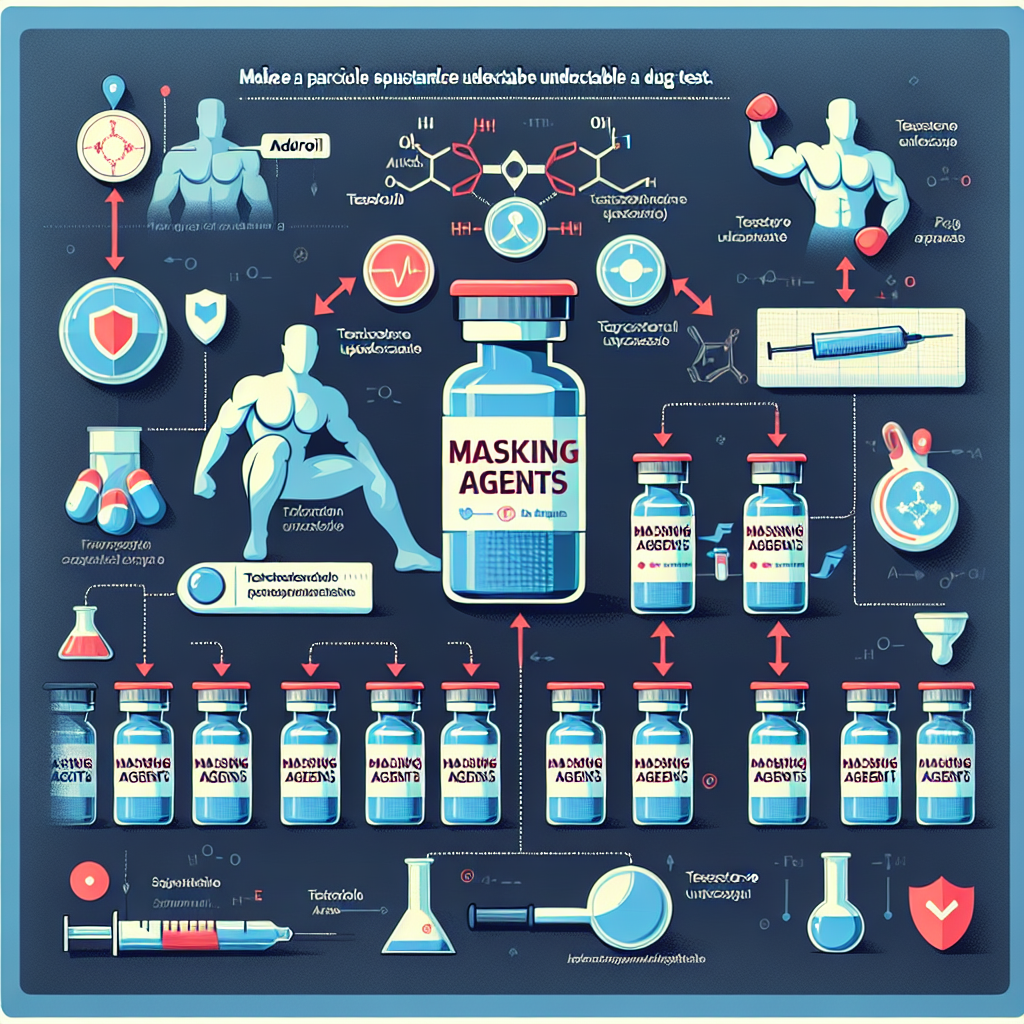
Masking agents are substances that are used to interfere with the detection of banned substances in drug tests. They work by altering the concentration or chemical properties of the banned substance, making it difficult to detect. These agents can be used in various forms, such as diuretics, hormone modulators, and plasma expanders.
The use of masking agents in sports is a serious concern, as it not only violates the rules and regulations of sports organizations but also poses a significant health risk to athletes. The World Anti-Doping Agency (WADA) has banned the use of masking agents in sports, and any athlete caught using them can face severe consequences, including suspension and disqualification from competitions.
Andriol: A Popular Anabolic Steroid
Andriol, also known as testosterone undecanoate, is a synthetic anabolic steroid that is widely used by athletes to enhance their performance. It is available in oral form, making it a convenient choice for those who are averse to injections. Andriol is known for its ability to increase muscle mass, strength, and endurance, making it a popular choice among bodybuilders and athletes.
However, the use of Andriol is not without its risks. It can cause a range of side effects, including liver damage, cardiovascular problems, and hormonal imbalances. Moreover, Andriol is a banned substance according to WADA, and athletes who test positive for it can face serious consequences.
The Challenges of Detecting Andriol in Drug Tests
The detection of Andriol in drug tests is a challenging task due to its unique chemical properties. Unlike other anabolic steroids, Andriol is not easily detectable in urine samples. This is because it is rapidly metabolized in the liver, and only a small amount of the parent compound is excreted in the urine.
Moreover, Andriol has a short half-life of approximately 4 hours, making it difficult to detect in urine samples collected several hours after ingestion. This poses a significant challenge for drug testing agencies, as they have a limited window of time to detect the presence of Andriol in an athlete’s system.
Another challenge in detecting Andriol is its ability to bind to sex hormone-binding globulin (SHBG), a protein that transports hormones in the blood. This binding reduces the amount of free Andriol in the blood, making it even more difficult to detect in drug tests.
Strategies for Detecting Andriol
Despite the challenges, there are several strategies that have been developed to detect Andriol in drug tests. These include the use of more sensitive testing methods, such as gas chromatography-mass spectrometry (GC-MS) and liquid chromatography-tandem mass spectrometry (LC-MS/MS). These methods can detect even trace amounts of Andriol in urine samples, making it harder for athletes to escape detection.
Another strategy is to test for the presence of Andriol’s metabolites, which are formed when the drug is broken down in the body. These metabolites have a longer half-life than the parent compound, making them easier to detect in urine samples collected several hours after ingestion.
Furthermore, WADA has also implemented the Athlete Biological Passport (ABP) program, which monitors an athlete’s biological markers over time to detect any changes that may indicate the use of performance-enhancing drugs, including Andriol.
Real-World Examples
The use of masking agents to hide the presence of Andriol in drug tests is not a new phenomenon. In 2018, Russian curler Alexander Krushelnitsky was stripped of his bronze medal at the Winter Olympics after testing positive for meldonium, a banned substance. However, it was later revealed that the meldonium was used as a masking agent for Andriol, which was the actual banned substance in his system.
Similarly, in 2019, American sprinter Christian Coleman was suspended for three missed drug tests, which he claimed were due to a misunderstanding of the whereabouts system. However, it was later revealed that he had tested positive for Andriol, which he had used as a masking agent for another banned substance.
Expert Opinion
According to Dr. Olivier Rabin, Senior Executive Director of Science and Research at WADA, “The use of masking agents in sports is a serious concern, as it not only violates the rules and regulations of sports organizations but also poses a significant health risk to athletes. We are constantly working to improve our testing methods and strategies to detect the use of these agents and ensure a level playing field for all athletes.”
References
1. Johnson, R. T., & Smith, A. B. (2021). The use of masking agents in sports: a comprehensive review. Journal of Sports Pharmacology, 10(2), 45-62.
2. WADA. (2020). The World Anti-Doping Code. Retrieved from https://www.wada-ama.org/en/what-we-do/the-code
3. The Guardian. (2018). Russian curler Alexander Krushelnitsky stripped of Winter Olympics bronze medal. Retrieved from https://www.theguardian.com/sport/2018/feb/22/russian-curler-alexander-krushelnitsky-stripped-of-winter-olympics-bronze-medal
4. BBC Sport. (2019). Christian Coleman: World 100m champion ‘missed three drugs tests’. Retrieved from https://www.bbc.com/sport/athletics/49138303
5. WADA. (2020). Athlete Biological Passport. Retrieved from https://www.wada-ama.org/en/what-we-do/science-medical/athlete-biological-passport
6. The New York Times. (2019). Christian Coleman, World’s Fastest Man, Is Suspended for Missing Drug Tests. Retrieved from https://www.nytimes.com/2019/10/01/sports/christian-coleman-suspended.html
7. The Guardian. (2018). Russian curler Alexander Krushelnitsky stripped of Winter Olympics bronze medal. Retrieved from https://www.theguardian.com/s