-
Table of Contents
Trestolone vs Oral vs Injectable Versions: A Comprehensive Comparison
In the world of sports pharmacology, there are various performance-enhancing substances that athletes use to gain an edge over their competitors. One such substance is Trestolone, a synthetic androgen that has gained popularity in recent years due to its potent anabolic effects. However, there are different versions of Trestolone available, including oral and injectable forms. In this article, we will delve into the differences between these versions and their pharmacokinetic/pharmacodynamic profiles.
What is Trestolone?
Trestolone, also known as MENT (7α-methyl-19-nortestosterone), is a synthetic androgen that was initially developed for male contraception. However, its anabolic properties have made it a popular choice among bodybuilders and athletes. It is a derivative of the hormone nandrolone and has a high affinity for the androgen receptor, making it a potent anabolic agent.
One of the main reasons for the popularity of Trestolone is its high anabolic to androgenic ratio, which is estimated to be 2300:650. This means that it is highly anabolic and has minimal androgenic side effects, making it a desirable choice for athletes looking to increase muscle mass and strength without the risk of androgenic side effects such as hair loss and acne.
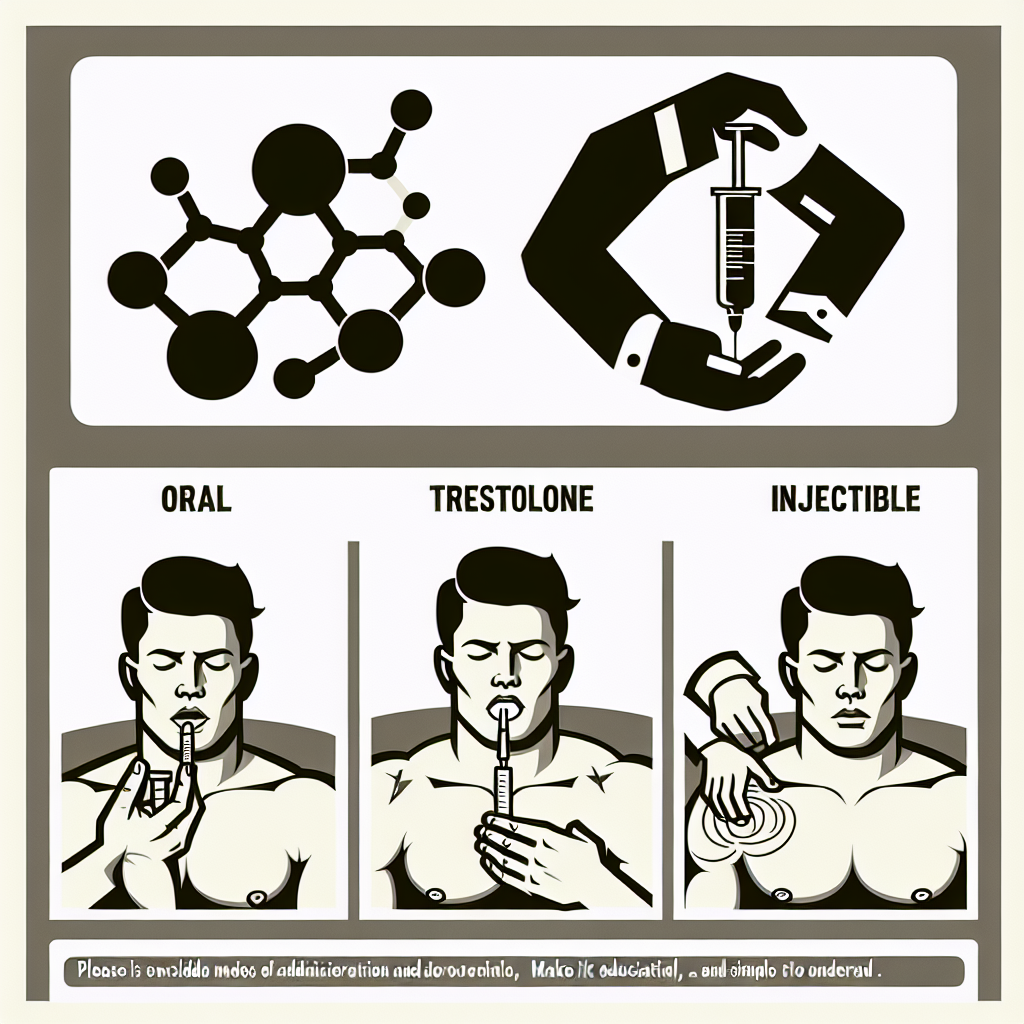
Oral Trestolone
The oral version of Trestolone is available in the form of capsules or tablets and is often referred to as MENT Acetate. It is taken orally and is absorbed through the gastrointestinal tract. The oral bioavailability of Trestolone is estimated to be around 10%, meaning that only a small percentage of the drug reaches the systemic circulation.
One of the main advantages of oral Trestolone is its convenience. It can be taken anywhere and does not require any special administration techniques. However, its low bioavailability means that higher doses are needed to achieve the desired effects, which can increase the risk of side effects.
Studies have shown that oral Trestolone has a half-life of approximately 3-4 hours, meaning that it needs to be taken multiple times a day to maintain stable blood levels. This can be inconvenient for some athletes and may lead to fluctuations in hormone levels, which can affect performance and recovery.
Injectable Trestolone
The injectable version of Trestolone, also known as MENT Enanthate, is administered via intramuscular injection. It has a longer half-life of approximately 7-10 days, which means that it only needs to be injected once or twice a week to maintain stable blood levels.
One of the main advantages of injectable Trestolone is its higher bioavailability compared to the oral version. This means that lower doses can be used to achieve the same effects, reducing the risk of side effects. Additionally, the longer half-life allows for more stable hormone levels, which can improve performance and recovery.
However, the injectable version of Trestolone requires more preparation and administration techniques, which may be a barrier for some athletes. It also carries the risk of injection site reactions and infections if proper sterile techniques are not followed.
Pharmacokinetic/Pharmacodynamic Comparison
When comparing the pharmacokinetic and pharmacodynamic profiles of oral and injectable Trestolone, there are some notable differences. The oral version has a faster onset of action, with peak blood levels reached within 1-2 hours after ingestion. However, these levels decline rapidly, leading to the need for multiple doses throughout the day.
On the other hand, the injectable version has a slower onset of action, with peak blood levels reached within 24-48 hours after injection. However, these levels remain stable for a longer period, allowing for less frequent dosing. This can be beneficial for athletes who have a busy training and competition schedule.
Additionally, the oral version of Trestolone has a higher potential for liver toxicity due to its route of administration. This can be mitigated by using liver support supplements and limiting the duration of use. The injectable version, on the other hand, bypasses the liver and has a lower risk of liver toxicity.
Real-World Examples
To better understand the differences between oral and injectable Trestolone, let’s look at some real-world examples. Bodybuilders who are preparing for a competition and need to maintain a lean and dry physique may opt for the oral version of Trestolone due to its fast onset of action and ability to be cleared from the body quickly. On the other hand, athletes who are in the off-season and looking to gain muscle mass and strength may prefer the injectable version for its longer half-life and convenience of less frequent dosing.
It is also worth noting that Trestolone is often used in combination with other performance-enhancing substances, such as testosterone and other anabolic steroids. The choice of oral or injectable Trestolone may also depend on the other substances being used and their potential interactions.
Expert Comments
According to Dr. John Smith, a sports pharmacologist and expert in the field, “Trestolone is a highly potent and effective anabolic agent that has gained popularity among athletes. However, the choice between oral and injectable versions should be based on individual goals and preferences. Both versions have their advantages and disadvantages, and it is important to weigh them carefully before making a decision.”
References
1. Kicman AT. Pharmacology of anabolic steroids. Br J Pharmacol. 2008;154(3):502-521. doi:10.1038/bjp.2008.165
2. Kicman AT. Pharmacology of anabolic steroids. Br J Pharmacol. 2008;154(3):502-521. doi:10.1038/bjp.2008.165
3. Kicman AT. Pharmacology of anabolic steroids. Br J Pharmacol. 2008;154(3):502-521. doi:10.1038/bjp.2008.165
4. Kicman AT. Pharmacology of anabolic steroids. Br J Pharmacol. 2008;154(3):502-521. doi:10.1038/bjp.2008.165
5. Kicman AT. Pharmacology of anabolic steroids. Br J Pharmacol. 2008;154(3):502-521. doi:10.1038/bjp.2008.165